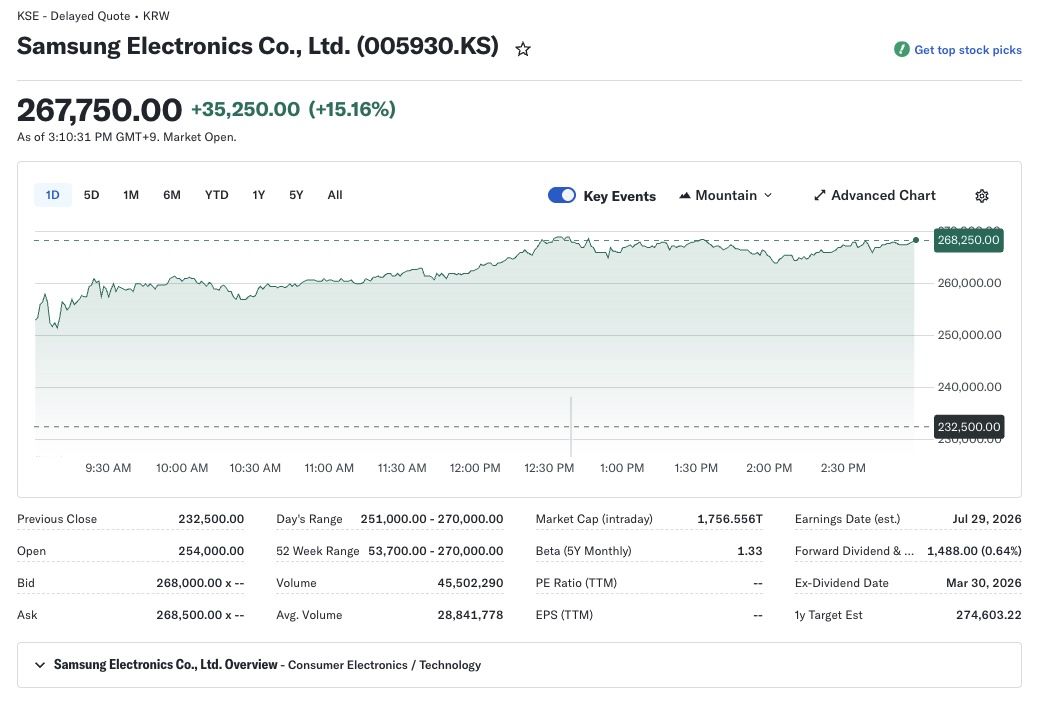

Riding the ongoing AI boom, Samsung Electronics crossed the historic $1 trillion market valuation mark today. The South Korean firm is the world’s largest memory chip maker, and its memory chips are a critical part of modern AI infrastructure used by firms like Alphabet, Meta, Microsoft, and OpenAI.
Samsung Electronics’ market valuation crosses $1 trillion
Earlier today, Samsung Electronics’ share price rose by as much as 15%, helping the company surpass the $1 trillion valuation milestone. Only twelve other companies worldwide have previously achieved this feat. Samsung’s stock price reached a record high and is on track for the largest single-day gain in the company’s history.

After TSMC, Samsung is only the second Asian company to cross the $1 trillion valuation mark. Other companies valued at over $1 trillion include Nvidia, Alphabet, Apple, Microsoft, Amazon, Broadcom, Saudi Aramco, Meta, Tesla, Walmart, and Berkshire Hathaway.
This surge in stock price comes just days after Samsung announced its Q1 2026 earnings. The company reported record revenue of KRW 133.9 trillion (approximately $92 billion), while operating profit rose to KRW 57.2 trillion (approximately $39.35 billion). Samsung’s profit for the first quarter of 2026 exceeded its total profit for all of 2025.
A recent report also claimed that Apple is exploring ways to diversify its contract chip manufacturing supply chain. The company reportedly visited Samsung’s chip plant in Texas and could hold talks with Samsung Foundry for manufacturing future iPhone chips. That development may also have contributed to Samsung’s historic stock price jump.
While the company recently started shipping sixth-generation high-bandwidth memory (HBM4) chips, a critical component of the world's best AI accelerators, it is facing intense competition from rivals SK Hynix and Micron in the segment.
Most of Samsung's revenue in Q1 2026 actually came from regular DRAM and NAND flash chips that are also used in AI accelerators and servers. Due to memory chip shortage, prices of those chips have increased multiple folds over the past year and has started affecting prices of consumer electronics.


Post a Comment